

Stepping Through the Gates
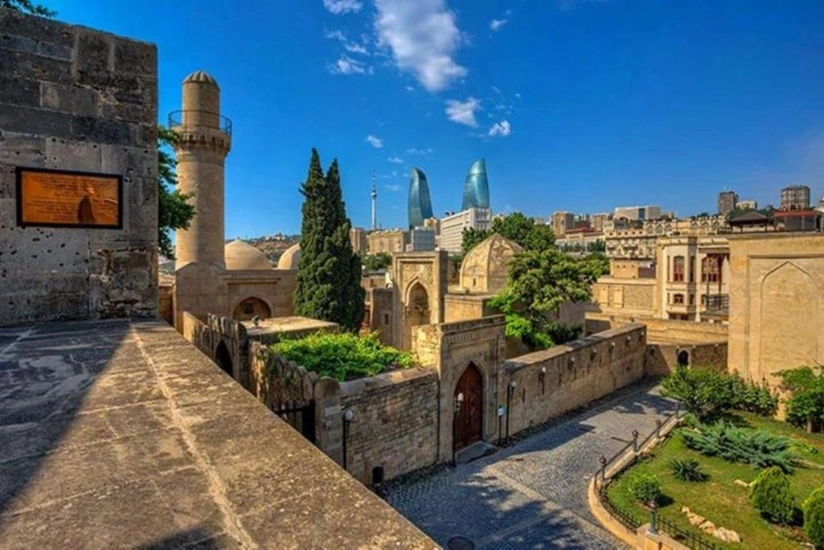
There is a moment that happens to almost every visitor who passes through the ancient gates of Baku's Old City — Icherisheher — for the first time.
The noise of the modern city drops away. The wide boulevards, the glass towers, the traffic — all of it disappears behind thick stone walls that have stood since the 12th century. What replaces it is something harder to describe: narrow cobblestone lanes, the smell of old stone and wood smoke, the sound of your own footsteps echoing differently than they did thirty seconds ago.
Tourists consistently say the same thing: "It feels like traveling into a different world. Like history is not behind glass in a museum — you are actually inside it."
That feeling is real. And this guide will help you make the most of it.
A Brief History of the Walls
Icherisheher — which simply means "Inner City" in Azerbaijani — was built within the 12th century as a fortified settlement surrounded by two concentric defensive walls. For centuries, those double walls protected everything inside them: palaces, mosques, caravanserais, bathhouses, and the daily lives of thousands of people.
When Russian imperial forces expanded Baku in the early 19th century, they demolished the outer wall to make room for the growing city outside. What survived is what you see today — the inner wall, still largely intact, encircling roughly 22 hectares of one of the most historically dense urban spaces in the entire Caucasus region.
Walking these streets, you are walking on ground that has been continuously inhabited for nearly a thousand years.
How to Enter and Where to Start
There are two recommended entry points depending on your starting location.
The most atmospheric approach is through the Twin Gate entrance — the main historic gateway that gives you the full arrival experience, the stone arch framing the lane ahead of you.
Alternatively, if you are coming by metro, exit at Icherisheher station and enter from the back side. This drops you directly into the quieter residential quarter of the Old City, which many visitors actually prefer — fewer crowds, more authentic atmosphere, and a gentler introduction before you work your way toward the busier central areas.
Best months to visit: April, May, and June. The weather is warm without being oppressive, the light is beautiful in the late afternoon, and the streets are lively without the peak summer crowds. The Old City in spring is genuinely one of Baku's finest experiences.
What to See — And What to Be Honest About
Maiden Tower — Climb It If Your Knees Allow
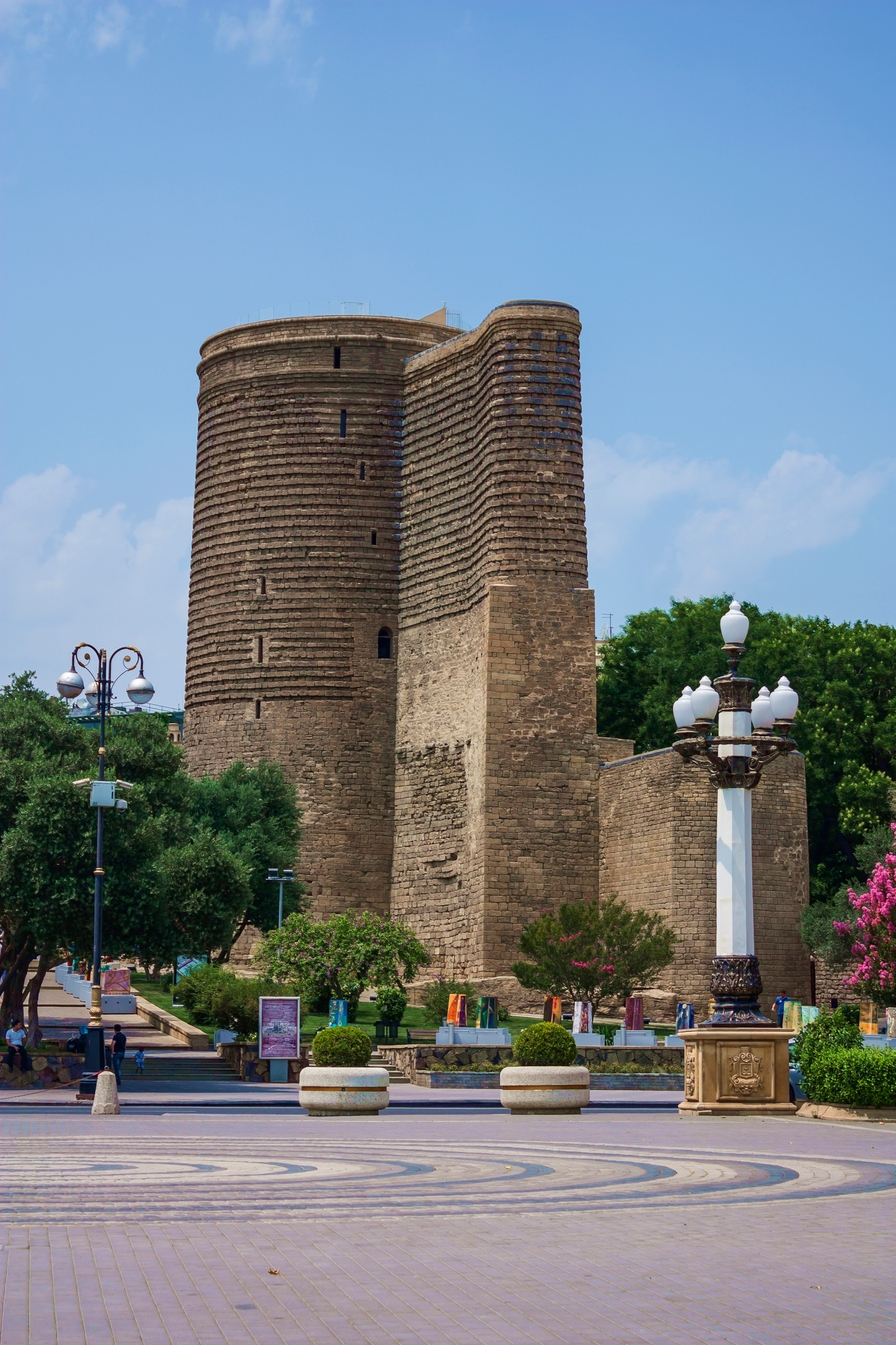
The Maiden Tower is the symbol of Baku. You will see it in every photograph, on every postcard, on the Azerbaijani five-manat note. Dating back to the 12th century, its exact original purpose remains debated by historians — defensive tower, Zoroastrian fire temple, astronomical observatory. Nobody knows for certain, which somehow makes it more interesting.
If you decide to go inside, be warned: the interior staircase is a narrow, steep spiral that winds upward through the full height of the tower. It demands reasonably strong knees and a comfort with tight spaces. If that describes you, climb it — the view from the top over the Old City rooftops and the Caspian Sea is genuinely worth it.
If it does not describe you, admire it from outside. It is equally impressive from the courtyard below.
Shirvanshah's Palace — Honest Assessment
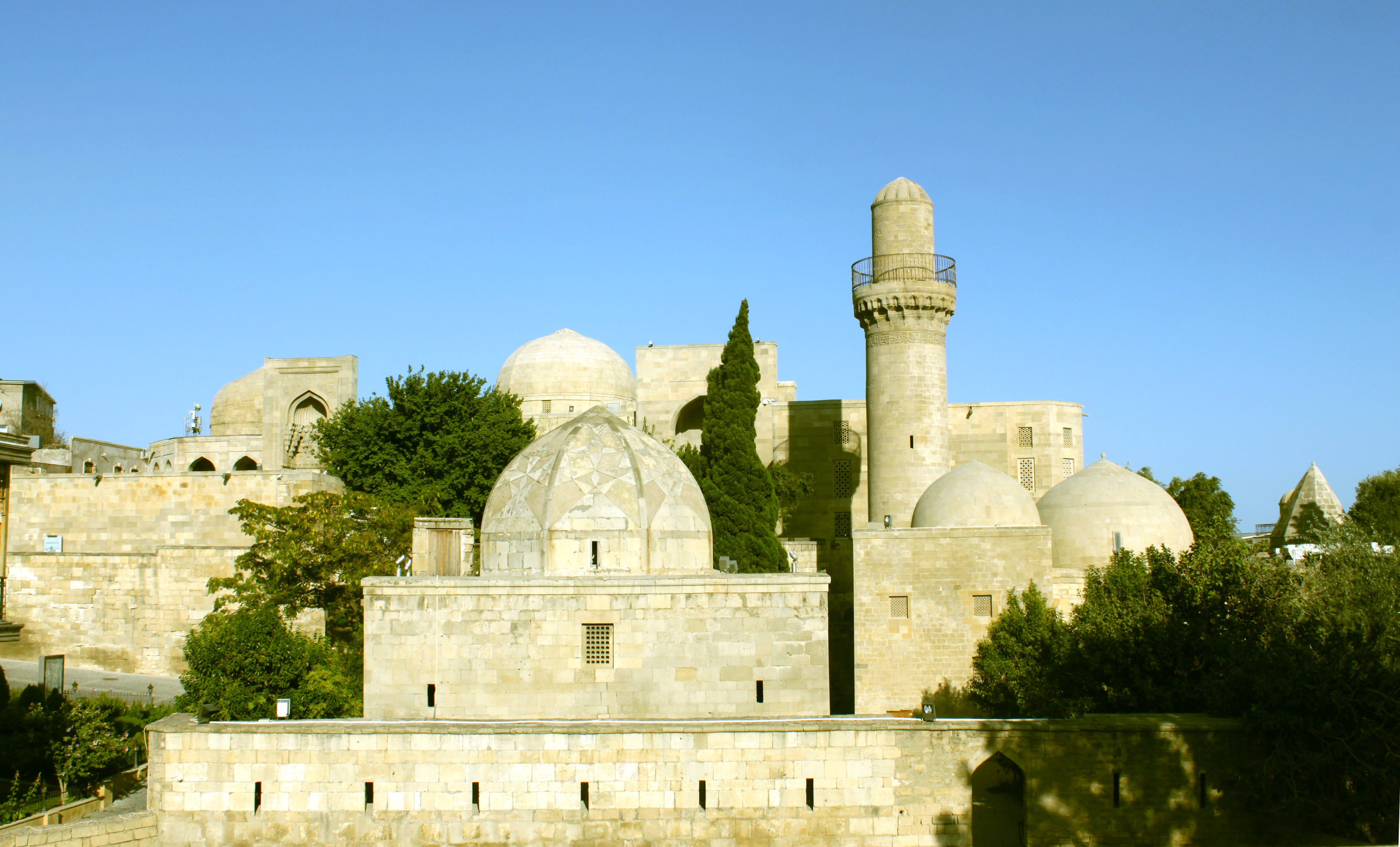
The Shirvanshah Palace complex is the largest historical monument inside the Old City and a UNESCO World Heritage Site. Architecturally, it is elegant — a beautifully proportioned example of 15th-century Azerbaijani craftsmanship, with a domed mosque, a mausoleum, and a series of interconnected courtyards.
But here is the honest truth that your guidebook will not tell you: it is modest in scale.
One of our Indian clients — a traveler from Hyderabad — put it with memorable directness after his visit: "This king was sitting in a small but very cozy palace. In Hyderabad, the Nizam's palace is so large you can travel through it by bus. Here it is different."
He was not being unkind. He was being accurate. If you are coming from a tradition of monumental Mughal or Ottoman imperial architecture, Shirvanshah's Palace will feel intimate rather than overwhelming.
What it offers instead is detail. Look closely at the stone carvings, the geometric patterns, the inscriptions. An Iranian visitor in our group once stopped at a particular wall and spent twenty minutes studying the Persian script carved into the stone — religious phrases, he explained, that reflected the deep historical connection between this region and the Persian cultural world. That kind of discovery rewards patience.
Visit with adjusted expectations and you will appreciate it properly.
The Illusion Museum — Especially with Children
A newer addition to the Old City's offerings, the Illusion Museum has quickly become one of the most enjoyable stops for families and groups. Interactive, visually surprising, and genuinely fun — it is the kind of place where adults forget to act like adults. If you are traveling with children, put this on the list without hesitation.
Where to Eat: Do Not Leave Without Trying This
Burc Gala Restaurant
If there is one meal you must have inside the Old City, it is at Burc Gala. The restaurant sits within the ancient walls and the atmosphere alone is worth the visit — stone archways, warm lighting, the feeling of dining somewhere that has been feeding people for centuries.
Order two things without negotiating with yourself: the crispy eggplant salad and the Azerbaijani qutab.
Qutab is a thin, folded flatbread filled with herbs, meat, or pumpkin — cooked on a convex griddle and served hot. It is one of the most fundamental foods in Azerbaijani cuisine and Burc Gala does it properly.
145 Tea Lounge — The Rest Stop You Deserve
At some point during your walk through the Old City, your feet will ask for a break. When that happens, find 145 Tea Lounge.
The terrace offers a view that combines the ancient rooftops of Icherisheher with the Caspian Sea in the distance — one of those rare urban viewpoints that gives you two completely different worlds in a single frame.
Order tea. But understand what that means in Azerbaijan.
Tea here is never served alone. Azerbaijani tea culture dictates that a glass of amber-colored black tea arrives with an entire accompanying spread — jams, pastry, sweets, nuts, candies, and often dried fruits. Lemon on the side. Sometimes herbs steeped alongside. The tea itself is often drunk through a sugar cube held between the teeth — a tradition that has survived every political change this region has ever experienced.
Sit with this. Do not rush it. The Old City will wait.
The Carpet Shops: Go Deeper
The moment you enter the Old City, small gift shops will appear on both sides of the lane — scarves, magnets, decorative plates, the usual tourist inventory. These are fine for quick souvenirs.
But if you want something genuinely worth bringing home, walk past all of it and go deeper into the Old City.
In the quieter inner lanes, away from the main tourist flow, you will find the old carpet shops. Azerbaijani carpets are not decorative items — they are one of the country's most significant cultural expressions, recognized by UNESCO as an Intangible Cultural Heritage of Humanity. Each region of Azerbaijan produces carpets with distinct patterns, colors, and weaving techniques that tell you exactly where the carpet came from.
You do not need to buy a large carpet. Many shops sell smaller pieces — wall hangings, decorative rugs, prayer mats — that are entirely hand-made and cost a fraction of what equivalent quality would cost in Europe or the Gulf. These make for meaningful, lasting souvenirs rather than something that ends up in a drawer.
Take your time in these shops. The owners know their craft and will tell you the story behind each piece if you ask.
One Thing to Know About the Tour Guides
The Old City has a population of freelance tour guides who work the main entrance areas and approach tourists with offers of guided walks. Some are knowledgeable and genuinely helpful. Others are persistent in a way that some visitors find uncomfortable.
If you want a guided tour, agree on the price and scope before you start walking. If you prefer to explore independently, a polite but firm "no thank you" is all that is needed. Do not feel obligated to engage.
This is a minor note in an otherwise very safe and welcoming environment — but worth knowing so it does not catch you off guard at the gate.
For a safety level in Azerbaijan, you can check out another blog post. - https://www.luxline.az/en/blog/is-azerbaijan-safe-to-visit-2025
Novruz in the Old City — If You Can Time Your Visit
Every March, the Old City transforms for Novruz — Azerbaijan's ancient new year celebration, rooted in Zoroastrian tradition and marking the spring equinox.
The main square and surrounding lanes fill with market stalls in a scene that genuinely resembles a European Christmas market — food, music, traditional crafts, live performances, and a collective atmosphere of celebration that is entirely unique to this culture. Families come from across Baku and beyond. The energy is warm, crowded, and unforgettable.
If your travel dates fall anywhere near late March, arrange your Baku days to include an evening in the Old City during Novruz. It is one of those experiences that does not appear on most tourist itineraries — and should.
Getting to the Old City
The Old City sits in the heart of central Baku and is easily accessible from anywhere in the city.
By metro: Icherisheher station (Line 1, Green Line) deposits you directly at the back entrance. Simplest option.
By private transfer: If you are arriving from the airport or a hotel outside the center, a private car will drop you as close as possible to the main gate — the streets inside are pedestrian only.
Luxline operates city transfers and full Baku tours with professional drivers who know every entrance, parking point, and timing consideration around the Old City.
Book here → https://www.luxline.az/en
Final Thoughts
The Old City is not a museum. It is a living neighborhood where people wake up, make coffee, argue with their neighbors, and go to work — inside walls that were already ancient when Shakespeare was born.
Come in through the Twin Gate. Get lost in the carpet lanes. Drink your tea slowly at 145. Be honest with yourself about your knees before climbing Maiden Tower.
And if you visit in March — stay for the dancing.