

The Village That Time Forgot
There are places in this world that make you question everything you think you know about modern life. Khinalig is one of them.
Sitting at over 2,200 meters above sea level in the Greater Caucasus Mountains, Khinalig is one of the oldest continuously inhabited settlements on Earth. People have lived here — in these same stone houses, on these same mountain slopes — for thousands of years. The village is so remote, so high, and so self-contained that its inhabitants developed their own language, their own customs, and their own identity entirely separate from the rest of Azerbaijan.
At Luxline, we have brought travelers from across the world to Khinalig — Americans, Europeans, Asians. Without exception, every single one of them has said some version of the same thing upon arrival: "I was not prepared for this."
This guide will prepare you. But it will not fully prepare you. Some things have to be experienced.
Book your rides with us: https://www.luxline.az/en/booking
Who Are the People of Khinalig?
This is the detail that surprises almost every visitor, including many Azerbaijanis who make the trip for the first time.
The people of Khinalig are not ethnically Azerbaijani in the conventional sense. They are descendants of the ancient Caucasian Albanians — one of the earliest civilizations of the South Caucasus, predating both the arrival of Islam and the Turkic migrations that shaped the region's modern identity. Their faces are distinctly different — reddened and weathered by decades of high-altitude mountain wind and sun, with features that set them apart immediately from the population of Baku or even Guba below.
Most remarkably, they speak Khinalig — a language isolate so unique that linguists consider it one of the rarest languages in the world. It shares no mutual intelligibility with Azerbaijani, Russian, or any other regional language. When you hear it spoken in the village, you are hearing something that has survived, largely unchanged, for millennia.
Walking through Khinalig and hearing that language around you, watching the elders go about their day, is the closest most people will ever come to genuine time travel.
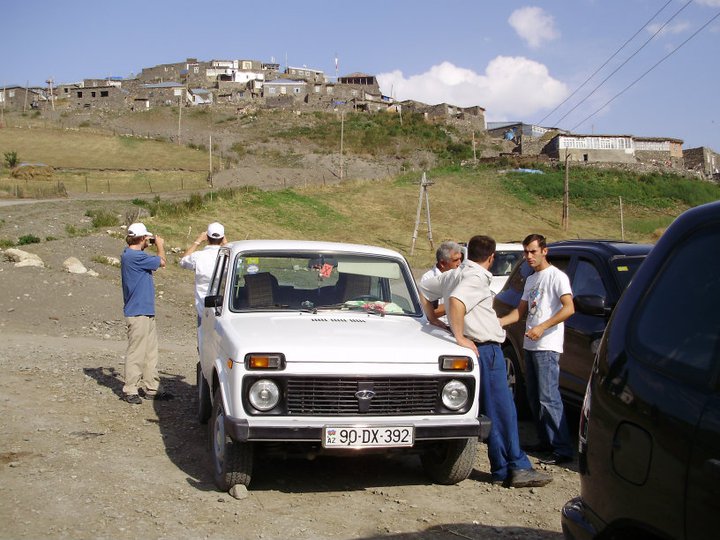
Getting There: The Road from Baku to Khinalig
Total distance: Approximately 220 km from Baku Total driving time: 4 to 5 hours, depending on stops
Baku to Guba
The first leg of the journey is straightforward and comfortable. The road from Baku toward Guba district is in excellent condition. For travelers who want to cover distance quickly, there is a paid toll road that allows speeds of 130 to 150 km/h — significantly cutting travel time to the Guba region. This section of the drive is fast, smooth, and easy.
Guba to Khinalig
From Guba, the character of the journey changes entirely — and this is where it becomes memorable.
The road from Guba to Khinalig climbs steadily into the mountains. Most of the route is in good condition, with a few uneven stretches along the way. In summer months, the drive is straightforward for any competent driver in the right vehicle. In winter and early spring, however, the situation can change dramatically. Seasonal flooding and snow can damage sections of the road, turning certain stretches muddy and difficult to pass. In these conditions, only experienced drivers in proper 4x4 vehicles should attempt the route.
Our strong recommendation: always use a reliable 4x4 vehicle for this journey. Land Cruiser, Mitsubishi Pajero, or equivalent. This is not negotiable in shoulder seasons or winter. In summer, it is still strongly preferred — the mountain terrain demands it.
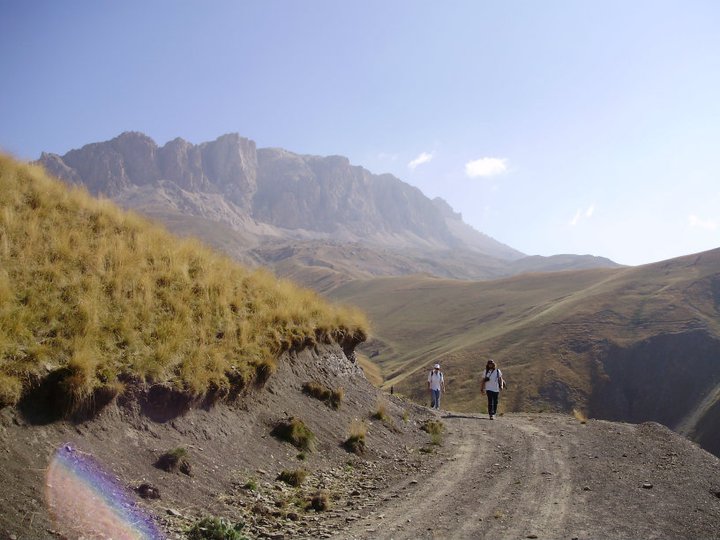
What to Expect When You Arrive
Nothing fully prepares you for the first view of Khinalig from the mountain road above.
The village appears suddenly — stone houses stacked against the mountainside as if placed there by hand centuries ago, because they were. There are no high-rises, no billboards, no signs of the 21st century visible from a distance. Just rock, sky, and a settlement that has been watching these same valleys for thousands of years.
The silence is the first thing most visitors notice. Then the air — thin, cold even in summer, and extraordinarily clean.
Then the people. Warm, unhurried, and possessed of a quiet pride that comes from knowing exactly who they are and where they come from.
The Hospitality Secret Nobody Tells You
This is perhaps the most important practical tip in this entire guide — and it is something most travel blogs miss entirely.
If you want to experience Khinalig the way it was meant to be experienced, do not book a hotel down in Guba and drive up for a few hours. Instead, stay in the village itself.
Local villagers regularly open their homes to travelers. For a small nightly fee, you can sleep in a traditional Khinalig household, surrounded by the same architecture and way of life that has existed here for centuries.
Here is the part that stops every visitor in their tracks: the families will feed you. Breakfast, lunch, dinner — prepared and served with complete generosity, often without any mention of additional payment.
This is not an oversight. It is culture. In Khinalig, feeding a guest is not a service — it is an obligation of hospitality. To charge a stranger for food would be, in their eyes, a small shame.
Practical tip: Always insist on paying for the food anyway. Press gently but genuinely. Your hosts will likely refuse once, perhaps twice. Pay regardless. It is the respectful thing to do, and it supports a community that receives very little tourism revenue compared to what it deserves.
A Night Under the Stars: The Camping Experience
For those willing to go beyond a day trip, camping outside Khinalig is an experience that belongs in a category of its own.
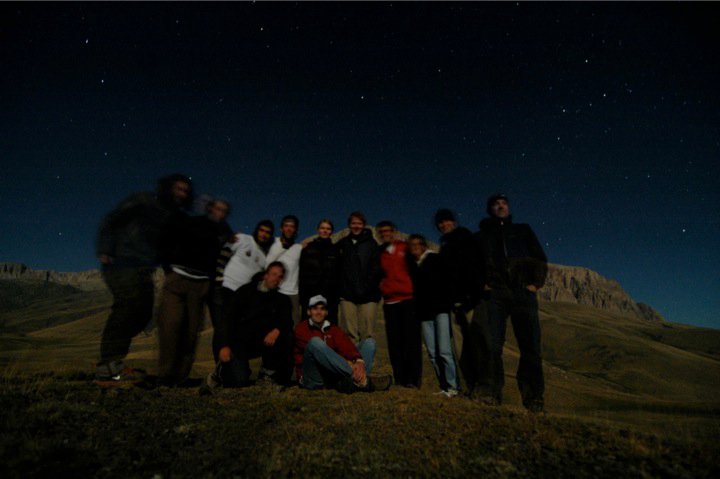
We organized a multi-day camping trip to the area with a group of American travelers — ten tents set up in the open highland beyond the village, fires burning around the perimeter as the sun dropped behind the Caucasus peaks. The guests had traveled extensively. Several had been to every continent.
Their reaction upon arriving at camp that evening was unanimous: "Being here feels like living 2,000 years ago. Like sharing the same moment with the ancient Albanians who stood on these same mountains."
As night deepened, the sounds began. First distant — wolves calling somewhere in the dark ridges above. Then closer. The guides kept the fires high. At some point during the night, one wolf came close enough to the camp perimeter to be seen. The fires held. The guides knew their work.
That same night, the Americans noticed the wildlife on the surrounding hillsides — jackals moving along the ridgeline, rabbits darting between rocks, shapes in the darkness that the mountain keeps as its own.
Someone started dancing. Then everyone was dancing — around the fires, under a sky with more stars than most of these travelers had ever seen in their lives. One of the guests, laughing and slightly breathless, said what everyone was feeling: "This is something we could never experience in America. Nothing comes close."
Practical Travel Tips
Best time to visit: May through September. July and August offer the most stable weather and warmest temperatures. May is beautiful — the mountain meadows are green and the crowds are minimal.
What vehicle to use: Generally, if recently there is not any flood, that means roads are okay, any sedan car can go there but be careful about the sharp curves and dangerous steeps. For a better experience maybe, Lada Niva, Land Cruiser or Pajero can be also good option.
Leave early — very early: If you are doing a day trip from Baku, depart by 6:00 or 7:00 AM at the latest. The drive takes 4 to 5 hours, and there are numerous stops along the way that will tempt you — and should. Each one can add 20 to 30 minutes. Arriving in Khinalig by midday gives you proper time in the village before the light fades.
If coming from Guba: The drive from Guba to Khinalig takes approximately 1.5 to 2 hours on its own, with stops.
Where to sleep: In the village, with a local family. This is not roughing it — it is the entire point.
What to bring: Warm layers regardless of season. At 2,200 meters, temperatures drop sharply after sunset even in summer. Good walking shoes. Cash only — there are no ATMs in Khinalig.
Winter travel: Possible for experienced travelers with the right vehicle and local guidance, but not recommended for first-time visitors. Road conditions can become genuinely difficult.
How to Get There with Luxline
Luxline operates private transfers from Baku to Khinalig in 4x4 vehicles with experienced drivers who know this route in every season. We can arrange day trips, overnight packages, or multi-day Guba-Khinalig itineraries with camping coordination.
It is totally safe and secure to travel within Azerbaijan. About the level of safety in Azerbaijan, check our previous blog post:
https://www.luxline.az/en/blog/is-azerbaijan-safe-to-visit-2025
Your driver will know where to stop, what to look for on the road, and how to navigate conditions that no GPS map accounts for.
Book your Khinalig transfer with Luxline → https://www.luxline.az/en/booking
If you are planning to go to the Guba district directly from Baku airport, you can check our blog post about the best Baku airport transfer options:
Final Thoughts
Khinalig is not the kind of place you visit and then move on from quickly. It stays with you — the faces, the language, the fires, the silence above the treeline.
In a world where travel has become increasingly predictable, Khinalig is genuinely unpredictable. It will surprise you, disorient you slightly, and leave you better for it.
Go early. Stay late. Let a stranger feed you dinner. And keep the fires burning after dark.
Enjoy the Khinalig experience with our professional driver and guides: https://www.luxline.az/en/booking